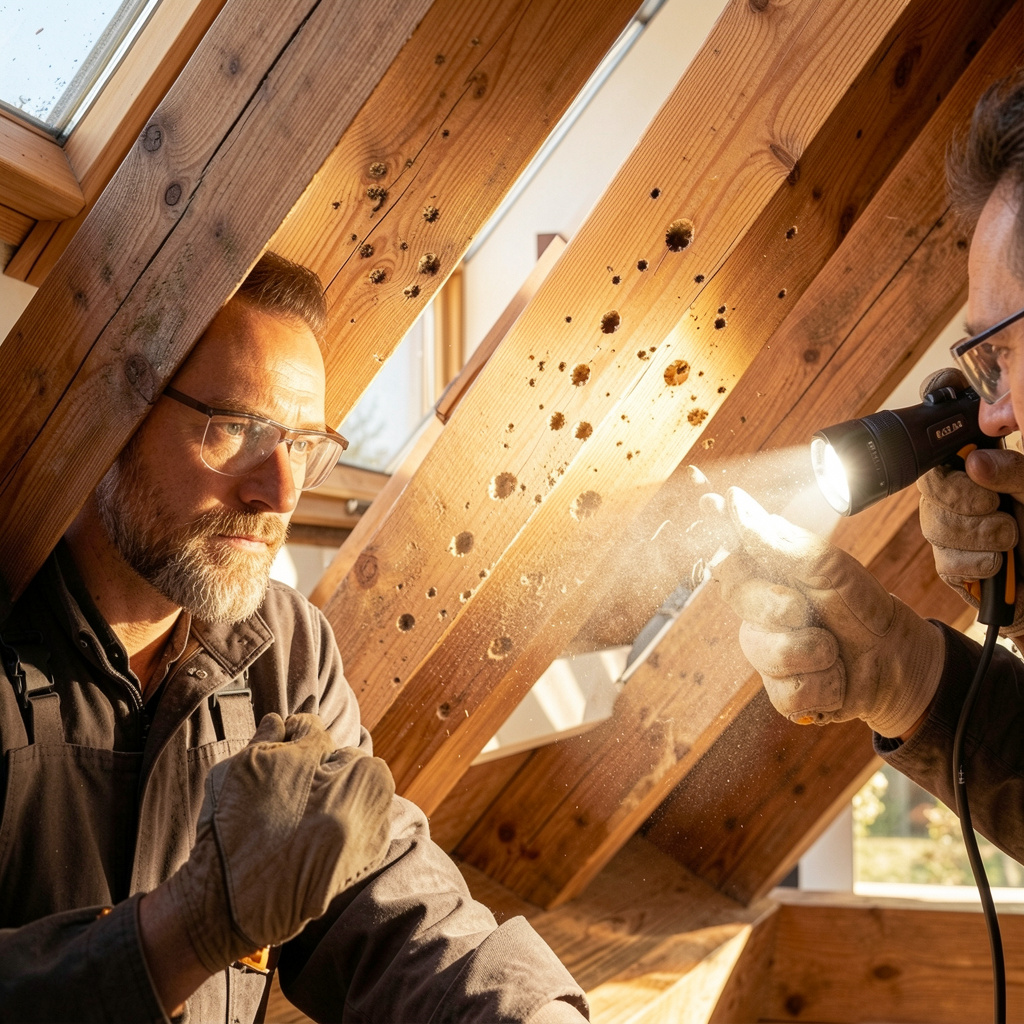
Discovering small holes in wooden furniture, floorboards, or roof beams can be alarming. However, one of the first questions homeowners should ask is not “Do I have woodworm?” but rather “Is the woodworm still active or is it an old infestation?”
This distinction is important because not every woodworm hole indicates a current problem. Many properties, especially older homes, contain timber that was attacked decades ago but no longer harbors living larvae. On the other hand, an active infestation can continue damaging wood for years if left untreated.
In this guide, you’ll learn how to tell whether woodworm is still active or dormant, what warning signs to look for, and when it’s time to seek professional help.
What Is Woodworm?
Despite its name, woodworm is not actually a worm. The term refers to the larvae of several species of wood-boring beetles, including:
- Common Furniture Beetle (Anobium punctatum)
- Deathwatch Beetle (Xestobium rufovillosum)
- House Longhorn Beetle (Hylotrupes bajulus)
- Powderpost Beetles (Lyctus species)
Adult beetles lay eggs on wooden surfaces or inside cracks. After hatching, the larvae tunnel through the timber while feeding on cellulose. Depending on the species and environmental conditions, they may remain hidden inside the wood for two to five years, and sometimes much longer.
Once fully developed, adult beetles emerge through small exit holes, mate, lay eggs, and begin the life cycle again.
Why It Matters Whether Woodworm Is Active
Treating an inactive infestation may result in unnecessary expense, while ignoring an active infestation can allow significant structural damage to develop over time.
Knowing the difference helps you:
- Decide whether treatment is needed.
- Prevent unnecessary repairs.
- Protect structural timber.
- Preserve valuable furniture.
- Monitor your property more effectively.
Signs of an Active Woodworm Infestation
Several clues suggest that woodworm is still active.
1. Fresh Exit Holes
Adult beetles create exit holes when they emerge from the timber.
Fresh holes usually have:
- Clean, sharp edges
- Light-colored exposed wood
- No accumulated dust or dirt
If new holes continue appearing each spring or summer, this is a strong sign of ongoing activity.
2. Fresh Frass
One of the most reliable indicators of active woodworm is frass.
Frass is the fine powder produced by larvae as they tunnel through wood.
Fresh frass is:
- Cream-colored or pale brown
- Dry and powdery
- Similar to very fine sawdust
If you clean away the powder and it reappears, larvae may still be active inside the timber.
3. Live Adult Beetles
Finding live beetles indoors during late spring or summer often indicates an active infestation.
Adult wood-boring beetles are usually:
- Brown
- Oval-shaped
- Between 2 mm and 7 mm long, depending on the species
Although adults live only a few weeks, their presence means a breeding cycle is underway.
4. New Damage Appearing
Compare photographs or previous inspections.
If you notice:
- Additional exit holes
- More frass
- Expanding areas of damage
the infestation is likely still active.
5. Soft or Weak Timber
Active larvae continue tunneling through the wood, gradually weakening it.
Warning signs include:
- Crumbling edges
- Soft spots
- Loose furniture joints
- Hollow-sounding timber
Signs of a Dormant or Old Infestation
Many older properties contain evidence of woodworm that is no longer active.
Typical signs include:
Old Exit Holes
Older holes generally have:
- Darkened edges
- Dust accumulation
- Worn appearance
No new holes develop over time.
No Fresh Frass
If powder does not reappear after cleaning, there may be no active larvae inside the wood.
No Beetles
If no adult beetles emerge during the expected season, the infestation may have ended naturally or been successfully treated.
Stable Timber
Wood that remains firm and unchanged over several years often indicates an inactive infestation.
How to Test Whether Woodworm Is Active
If you’re unsure, you can perform a few simple checks.
Clean the Area
Remove all visible dust and frass.
Then monitor the area over several weeks.
Fresh powder appearing again strongly suggests active larvae.
Mark Existing Exit Holes
Use a pencil or removable tape to note current holes.
Check again during spring and summer.
New holes indicate recent beetle emergence.
Inspect During Beetle Season
Most wood-boring beetles emerge between May and September.
This is the best time to look for:
- Adult beetles
- Fresh exit holes
- New frass
Photograph the Timber
Taking clear photographs allows you to compare changes over time.
Even subtle differences become easier to identify.
Can Dormant Woodworm Become Active Again?
This is a common misconception.
Old exit holes do not “come back to life.”
However, untreated timber that was previously infested can become reinfested if adult beetles lay new eggs in existing cracks or old holes.
This creates a new infestation, not the reactivation of the old one.
Which Areas Should You Inspect?
Woodworm often affects:
- Roof beams
- Floor joists
- Ceiling timbers
- Staircases
- Antique furniture
- Cabinets
- Wooden floors
- Window frames
- Doors
Older homes deserve particular attention because they often contain untreated timber.
Conditions That Encourage Active Infestations
Several factors make wood more attractive to wood-boring beetles.
These include:
- High humidity
- Roof leaks
- Poor ventilation
- Damp timber
- Untreated wood
- Long-term moisture problems
Keeping timber dry significantly reduces the risk of new infestations.
How to Prevent Reinfestation
Whether your woodworm is active or dormant, prevention is essential.
Control Moisture
Repair leaks promptly and improve ventilation.
Treat Vulnerable Timber
Apply suitable wood preservatives where appropriate.
Inspect Regularly
Check furniture and structural timber at least once a year.
Monitor Older Furniture
Antique furniture should be inspected frequently for new holes or fresh frass.
Schedule Professional Surveys
Older buildings benefit from periodic timber inspections.
When Should You Call a Professional?
Professional assessment is recommended if:
- Fresh frass continues appearing.
- New exit holes develop.
- Structural beams are affected.
- Timber feels soft or unstable.
- Multiple areas show signs of infestation.
- You’re uncertain whether the infestation is active.
A timber preservation specialist can identify the beetle species, determine whether the infestation is ongoing, and recommend the most appropriate treatment.
Common Myths About Active Woodworm
Myth 1: Every Exit Hole Means Active Woodworm
False. Many holes are years—or even decades—old.
Myth 2: Painting Over Holes Stops the Infestation
No. Paint hides the holes but does not eliminate larvae inside the timber.
Myth 3: Woodworm Dies During Winter
Incorrect. While adult beetles are usually absent in winter, the larvae remain inside the wood and continue developing.
Conclusion
Determining whether woodworm is active or dormant is essential before deciding on treatment. Fresh frass, newly formed exit holes, live adult beetles, and ongoing timber damage are all strong indicators of an active infestation. In contrast, old darkened holes, the absence of fresh powder, and stable timber often suggest that the infestation is no longer active.
Regular inspections, moisture control, and careful monitoring are the best ways to protect your home from woodworm. If you’re unsure about the condition of your timber, a professional inspection can provide peace of mind and ensure that any active infestation is treated before it leads to costly structural damage.Further Reading: https://www.shashel.eu official site for microwave woodworm treatment equipment.
